
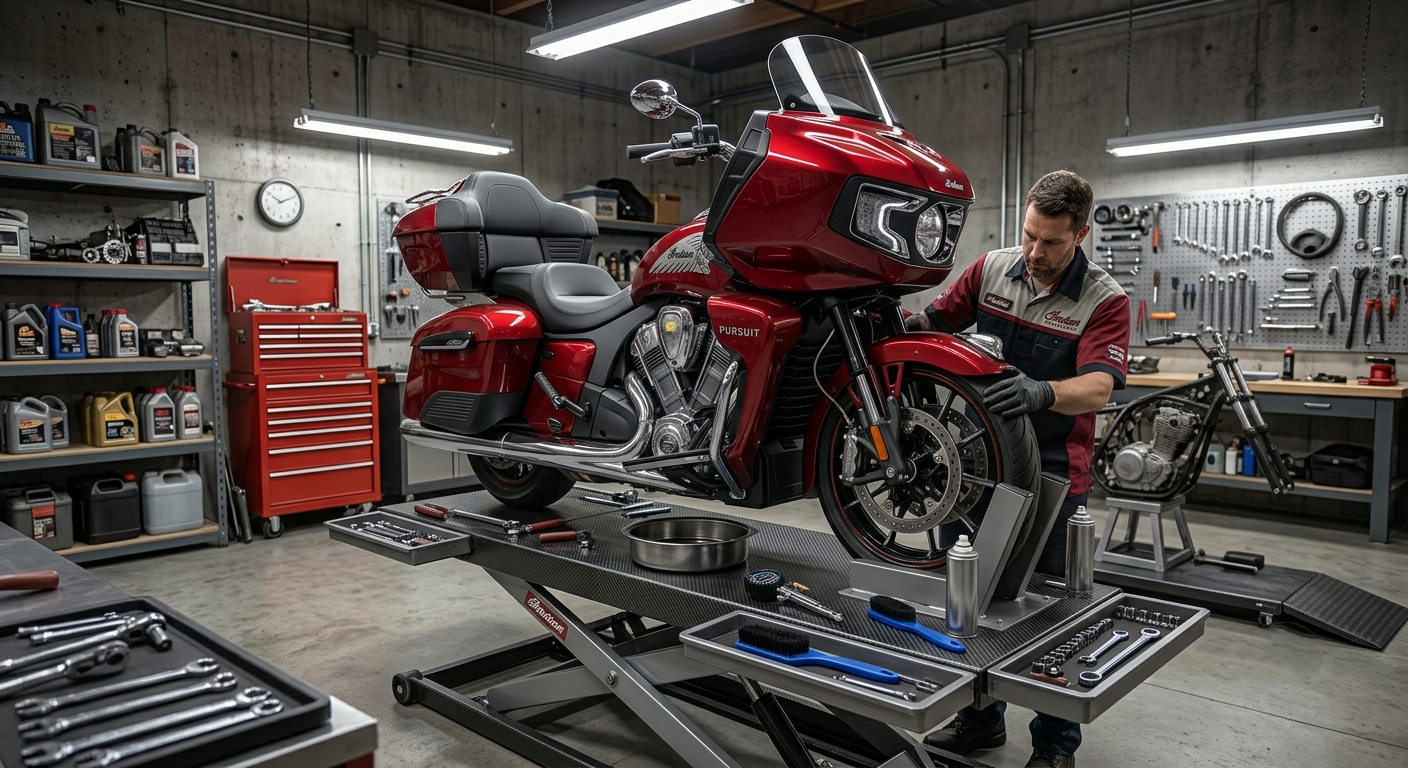
LThere is a distinct line between someone who just rides a motorcycle and someone who owns one. That line is drawn in the garage, usually somewhere near a toolbox smelling of WD-40 and spent motor oil.
Wrenching on your own machine isn’t just about saving a buck at the dealership—though that’s a massive perk. It’s about building a connection with your bike. When you’re screaming down an empty highway miles from civilization, knowing every bolt, fluid, and clearance is exactly where it should be because you put it there brings a priceless peace of mind.
If you’ve been hesitant to pick up a spanner, start here. These are four crucial, beginner-friendly maintenance tasks you can easily tackle in your garage this weekend.
I. The Lifeblood: Oil and Filter Change
If you do nothing else on this list, learn to change your own oil. Engine oil lubricates, cools, and cleans the tight tolerances of your high-revving powerplant. Letting it turn to black sludge is the fastest way to turn your engine into an expensive paperweight.
- Frequency: Every 3,000 to 5,000 miles (or once a year, minimum).
- The Gear: Fresh motorcycle-specific oil, a new OEM-spec filter, a drain pan, a socket set, and a new crush washer.
- The Secret: Always warm up the bike for 5 minutes before draining. Warm oil flows faster and carries more suspended contaminants out of the crankcase. And never forget to replace the crush washer on the drain plug—reusing an old one is a fast track to oil leaks on your clean garage floor.
II. The Connection: Chain Tension, Alignment, and Lube
Your chain is the unsung hero transferring raw horsepower from your transmission to the rear tire. A dry, loose, or misaligned chain robs you of power, accelerates sprocket wear, and—in a worst-case scenario—can snap and punch a hole clean through your engine case.
- Frequency: Inspect and lube every 300 to 500 miles; adjust tension as needed.
- The Gear: Rear paddock stand, chain cleaner, a dedicated chain brush, high-quality chain lube, and a tape measure.
- The Secret: Don’t just eyeball the tension. Check your bike’s swingarm or owner’s manual for the exact slack specification (usually between 20mm to 40mm). Measure the slack at the tightest point of the chain’s run while the bike is on its side stand or paddock stand as specified by the manufacturer. Once adjusted, ensure your wheel alignment marks match perfectly on both sides of the swingarm.
III. The Contact Patch: Tire Pressure and Tread Depth
On a motorcycle, your entire life relies on two small patches of rubber no larger than the palm of your hand. Riding on under-inflated or bald tires ruins your handling, kills your fuel economy, and is flat-out dangerous, especially when navigating damp roads.
- Frequency: Before every single ride.
- The Gear: A high-quality digital pressure gauge and a tread depth gauge.
- The Secret: Always check tire pressure “cold”—meaning the bike has been sitting for at least three hours. Riding heats up the air inside the tires, expanding it and giving you a falsely elevated reading. While you’re down there, inspect the tread for embedded nails, dry rot, and squaring-off in the center of the tire.
IV. The Spark: Battery Health and Terminal Cleaning
Modern bikes are essentially rolling computers, relying heavily on a healthy electrical system. A weak battery won’t just leave you stranded with a click-click-click at the starter; it can also cause erratic sensor readings and poor engine performance.
- Frequency: Every month (or continuously when parked using a smart charger).
- The Gear: A multimeter, a wire brush, baking soda, and a battery tender.
- The Secret: If your bike is sitting for more than a week, plug it into a smart battery tender. When inspecting the battery, look for white, powdery corrosion on the terminals. Clean it off with a mixture of baking soda and water, scrub it with a wire brush, and ensure the terminal bolts are snug. Always disconnect the negative (black) terminal first and reconnect it last to avoid accidental sparks.
The Golden Rule of the Garage: If a bolt feels like it’s cross-threading, stop. If you don’t know the torque spec, look it up. Wrenching is a game of patience and precision. Take your time, buy the right tools as you go, and enjoy the satisfaction of a job well done.
